Introduction
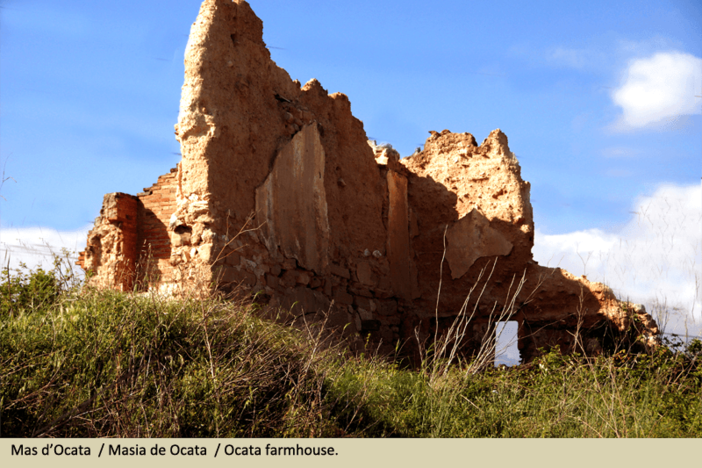
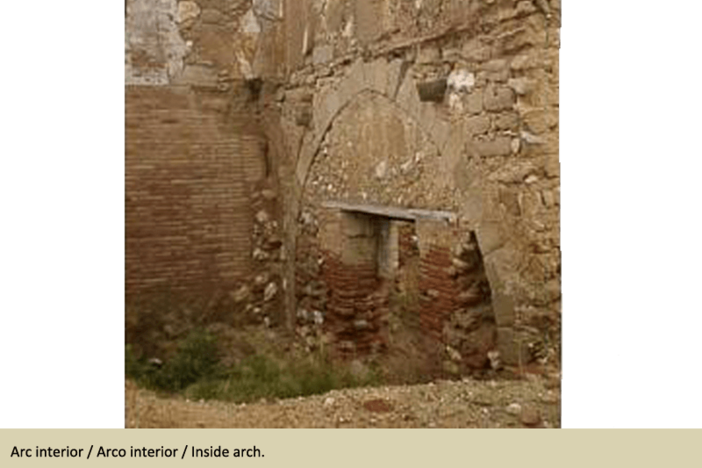
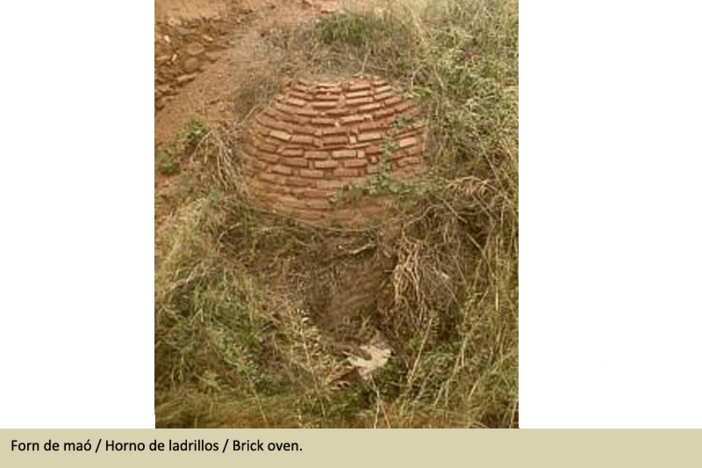
What is this building in front of us? It is the farmhouse of Ocata. Only the diaphragm arch and a small oven survive from the outer buildings. This place was investigated in the 1940s and 50s by Crusafont and Villalta, who found a great deal of animal fossils dating from the Vallesian period.
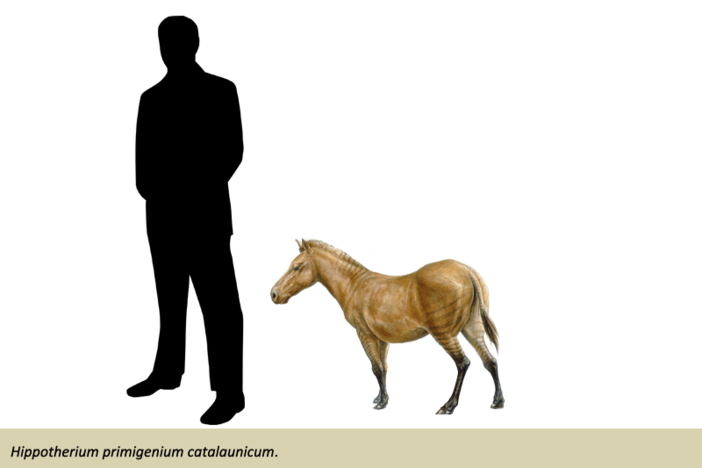
Among the most outstanding remains on this site is the Hippotherium primigenium catalauricum, known as the hipparion, the importance of which we have already explained. It helped define the transition from the Aragonian to the Vallesian period.
Crusafont and Villalta wrote to the French palaeontologist Paul Pirlot and invited him to study the remains. The result of the research identified a new species: a member of the Equidae of American origin with three toes on each leg.