Presentation
A Municipality That Has It All
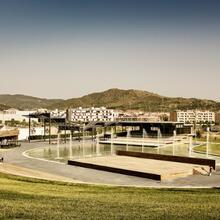
Viladecans is a municipality in the south of the comarca of Baix Llobregat, covering 20.4 km². It is located on the right bank of the Llobregat River, in the Marina, between the Murtra and Remolar ponds. The urban core of Viladecans is compact, occupying one-third of the entire municipal area, and is part of the Barcelona Metropolitan Area.
Its geographical location gives it significant importance both historically and economically, as it has served as a passage and connection point for various civilizations over the centuries.
The hydrography of Viladecans is dominated by the Llobregat River, which flows into the Mediterranean Sea. It not only shapes the municipality’s geography but has also influenced its social and economic development. The river has served as a transport route and commercial path. It has enabled agricultural production in the area, as there are several canals and irrigation channels along the river. However, proximity to the river has also meant that Viladecans has faced challenges related to water management and flooding during periods of heavy rain.
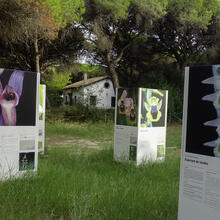
The riera de Sant Llorenç, also called de Llevatona, and the riera de Sant Climent or del Mas Fonts water the municipality, both disappearing into the marshes of the delta and spreading through a network of corridors that drain water toward the Murtra and Remolar ponds. These areas contribute to biodiversity.
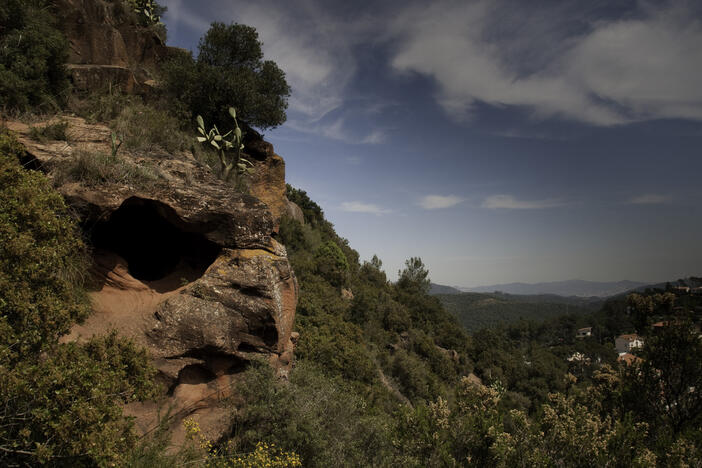
The terrain of Viladecans is mostly flat, with some small elevations primarily in the northeast, such as the last foothills of the Garraf massif. These act as a natural barrier protecting the municipality from cold northern winds, creating a microclimate favorable for agricultural growth and urban development.
Viladecans has a wide variety of geographic spaces, from the beach to the mountains, including protected natural areas and farmland. Specifically, it has five ecosystems: deltaic plain, marshland, dune area, forested area, and urban area.
On the beach, there are many adapted species. From the sand to the inland pine forest, the landscape, flora, and fauna change significantly and adapt to environmental conditions.
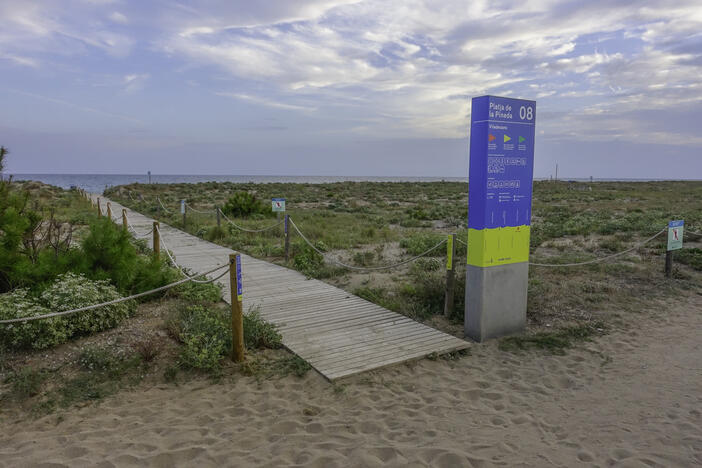
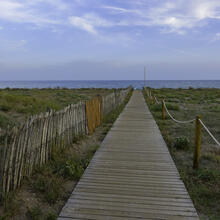
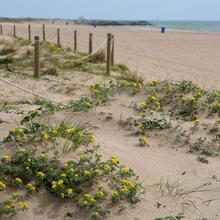
It is common to find dunes on the delta’s beaches. In Viladecans, there are still dunes in good condition, stabilized by the coastal pine forest of stone pine. Here, one can also find plants and animals that depend on them for survival.
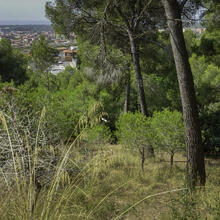
The dense coastal pine forest separates the beach from the rest of the municipality. The area combines elements of both coast and interior: one can observe the undulations of the old dunes and the coexistence of beach plants with others typical of the inland.
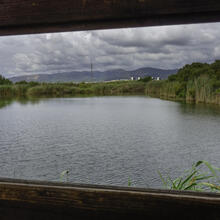
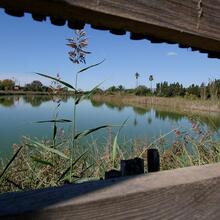
The municipality contains a significant portion of the protected areas of the Llobregat delta wetlands, consisting of ponds and marshes—unique, fragile, and scarce spaces with a great diversity of flora and fauna.
The Parc Agrari del Baix Llobregat, located in the low valley and delta of the river, covers 3,332 hectares. In Viladecans, the agricultural lands are included in this park and occupy one-fourth of the municipal area. In the Parc Agrari, mainly vegetables and fruit trees are cultivated, but it also serves recreational and educational purposes. Therefore, it represents an important ecological, landscape, cultural, and economic heritage for Viladecans.
All of this makes Viladecans a tourist destination with the BIOSPHERE commitment, meaning it has been awarded the international label, promoted by the Responsible Tourism Institute (ITR), which certifies destinations that meet commitments to responsible, environmentally sustainable, socially inclusive, and universally accessible tourism. More info:

Similarly, the Manual of Good Practices for sustainable tourism is presented in the form of a decalogue, which can be consulted here:
DECALOGUE OF GOOD PRACTICES
Un projecte finançat per:
Do not miss it
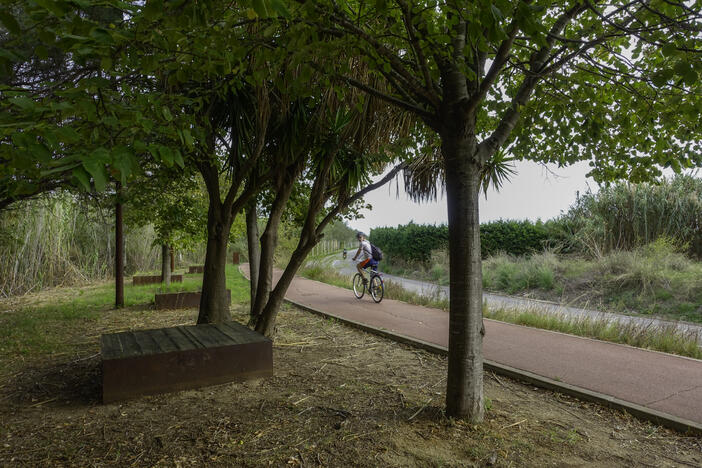
Llobregat Delta and riverbanks: stroll through the wetlands and riverbanks of the Llobregat to observe wildlife, cycle, and enjoy natural landscapes close to the city.
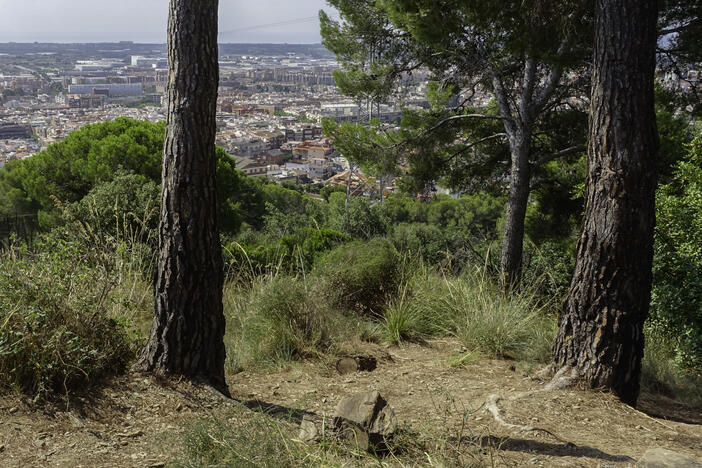
The beaches: walk through the coastal pine forest and follow the paths connecting the beaches to enjoy the dune landscape and birdwatching. Climb the viewpoint between Murtra and Cal Francès to admire views of the delta and coastline.
The Parc Agrari: where you can combine nature, heritage, and local gastronomy; it preserves an agricultural tradition with essential ecological and landscape functions in Baix Llobregat, highlighting the coexistence of agriculture and city.
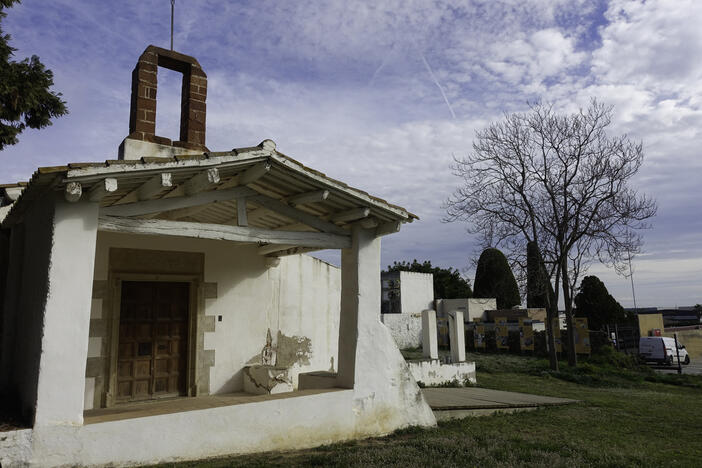
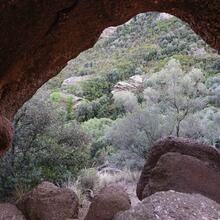
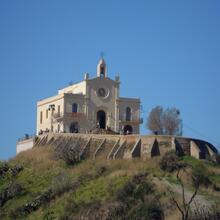
Montbaig Hills: where you will find the Sant Ramon hermitage, a Landscape Interpretation Center, and a bar service, offering exceptional views of the Llobregat delta and the Parc Agrari.
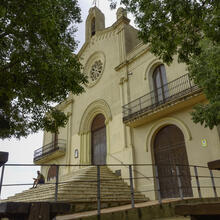
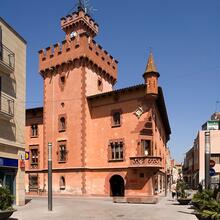
Historic center and local heritage: don’t miss the church of Sant Joan Baptista and the old farmhouses that tell the story of Viladecans’ agricultural past and urban transformation.
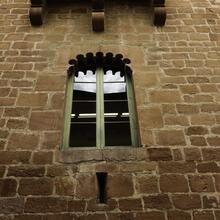
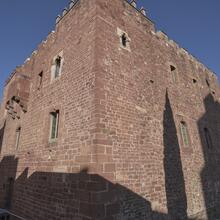
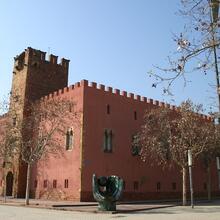
Viladecans castles and local museum: visit the castles (Torre del Baró, Torre-roja, and Torre de Can Modolell) and the museum (Ca n'Amat) to understand the origin and evolution of the municipality.
Auditori Atrium and cultural agenda: check the programming of Auditori Atrium to enjoy music, theater, and dance performances; it is the city’s cultural hub.
Markets, fairs, and local life: explore municipal markets and event agendas to taste local gastronomy and discover occasional activities and fairs.
When to go
The city fills with popular celebrations, especially during spring and summer, with neighborhood festivals.
The Mercat d’Art i Oficis is a fair held on the second Sunday of each month.
If you visit in July, you can also enjoy the Festival Internacional de Teatre de Carrer.
The Festa Major d'Estiu, around September 8, is anticipated for the pyromusical, havaneras, and giant gatherings, among other events. The Festa Major d'Hivern is celebrated on January 20, Sant Sebastià, with recreational and cultural activities for all audiences.
What to do
Agrotourism, guided tours, walking or cycling itineraries, or enjoying outdoor activities and sports in the Parc Agrari.
Walks and routes through the natural environment and green areas of the Llobregat delta; ideal for hiking, observing flora, fauna, and landscapes, cycling, or family outings.
Enjoy the natural beach environment, relax, and practice water sports.
Climb to the top of Montbaig Hills to see the Llobregat delta and Parc Agrari.
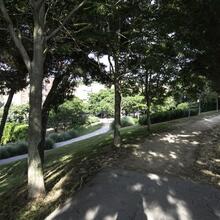
Have picnics, practice sports, and walk in green areas and parks such as parc de la Marina, parc Torrent de Ballester, parc de Can Guardiola, parc de la Torre-roja, and parc de Can Ginestar.
Follow the heritage itineraries and participate in organized museum activities to learn about the municipality’s history and heritage.
Check the programming at Auditori Atrium, a modern cultural space with one of the most interesting schedules in the Barcelona Metropolitan Area. Its program includes theater, dance, music, and even documentary cinema.
Search for markets, fairs, and concerts in the local agenda for specific dates; the local agenda website lists periodic events and recommended activities. Plans Viladecans.
Go shopping or spend an afternoon at malls and local shops; you will also find gastronomy-related activities and workshops in the metropolitan area. Shoping Viladecans.
For more things to do in Viladecans: https://www.viladecans.cat/en/dontmissviladecans
Did you know that
Viladecans is one of seven municipalities in Baix Llobregat recognized as a Biosphere Destination, the label awarded by the Diputació and the Barcelona Chamber of Commerce, in collaboration with the Consorci de Turisme del Baix Llobregat, to municipalities committed to applying sustainable best practices.
Viladecans has a City Brand. The “V” of Viladecans now becomes a wink. The smile emphasizes positive emotions. It highlights commitment, complicity, charisma, and the identity of the population. The city brand slogan, “Som poble, soc ciutat,” conveys the municipality’s dual nature. Viladecans has a village character but city services.
In 2025, Viladecans won the Green Leaf Award for work on the conservation and improvement of its five ecosystems, biodiversity, sustainability, environmental protection, and climate change mitigation.
The Llobregat delta is one of the three most important wetlands in Catalonia. The Paratge dels Reguerons has been classified as a Special Protection Area for Birds (ZEPA) since 1994 and is included in the Xarxa Natura 2000. The estany de la Murtra is one of Catalonia’s most important wetlands, declared a Special Protection Area for Birds since 2006.
The Pineda Litoral constitutes a habitat of European priority interest.
The Parc Agrari del Baix Llobregat is one of the oldest and most fertile agricultural areas in Catalonia.
One of Catalonia’s largest prehistoric sites is located at the riera de Sant Llorenç de les Canals, where, in 2008, fossilized bones of large animals such as horses, deer, rhinoceroses, and mammoths over 50,000 years old were found.
At the Bòbila Sala brick factory in the 1960s, a nearly 2-meter-long Elephas Antiquus tusk was discovered, buried in Quaternary clay, where more remains probably existed but were never excavated. The tusk is now housed at the Museu de Ciències Naturals de Barcelona (NAT Forum).
The Viladecans Olympic Baseball Stadium is one of the most important baseball stadiums in Catalonia, along with Estadi Pérez de Rozas, and hosted the baseball events at the 1992 Barcelona Olympic Games. Today, it is home to Club Beisbol Viladecans, one of the teams in the Spanish Baseball and Softball League, linked to the Real Federación Española de Beisbol y Softbol.
Around
The city borders the following municipalities:
Sant Boi de Llobregat, home to the Termes Romanes, a well-preserved Roman thermal complex.
Gavà, where the mines and Venus de Gavà, notable prehistoric archaeological heritage, are located.
Sant Climent de Llobregat, home to the Mirador dels Xiprers, with views over the Llobregat.
El Prat de Llobregat, where the delta and Llobregat estuary, the airport, and the Airport del Prat viewpoint are located.
Contact telephones
Links of interest
Lloc web amb la informació municipal de l’Ajuntament de Viladecans.
Lloc web amb la informació d’esdeveniments culturals de Viladecans.