Rutes Viladecans
Rutes Viladecans
Rutes Viladecans
Rutes Viladecans
Rutes Viladecans
Rutes Viladecans
Return

R2. Towards the Remolar-Filipines Natural area

Route
08/09/2025
Index card

Introduction

This route is technically easy, although long if undertaken on foot, with little elevation gain and suitable for all audiences and ages. The itinerary connects the urban centre with the natural reserve of the Remolar and les Filipines, located on the coast of Viladecans, crossing the traditional farmlands of the Parc Agrari del Baix Llobregat. 

The Remolar and les Filipines Natural Area, protected due to its high ecological value, stands out for the diversity of coastal environments it preserves and for its remarkable biodiversity. 

This is a technically simple route, suitable for all audiences. It is comfortable to do by bicycle, but demanding on foot, as the total out-and-back distance is 16.7 km. 


We recommend the Local Natura App to do this route. Download it for free here:

Apple store Google Play
  • Typology
    Linear
  • Difficulty
    Easy
  • Duration
    4 hours 14 minutes
  • Slope
    14.00 meters
  • Distance
    16.70 km
  • Theme
    Flora and fauna
    Environment
    Landscaping
    Beaches and coves
  • Activity
    By foot
    By bike
  • Rating

Slope graph

Rutes Viladecans

Description

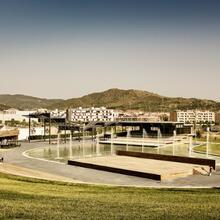
The itinerary begins heading south from the parc de la Marina de Viladecans. The first section passes through the area of Ca l’Alemany, where the Viladecans The Style Outlets shopping centre is currently located. From here, the route follows the B-204 road, entering the Parc Agrari and offering wide views over the delta, until reaching the Marina del Portell de la Llana roundabout, where an important archaeological site is located.

After passing the roundabout and the old València road, also known as the Camí Ral, the route crosses to the left-hand side. A adapted path leads to Cal Simon and, a few metres beyond the farmhouse, connects with the Camí de les Filipines, nowadays known as the Camí del Mar.

The route continues southwards to another roundabout, following the signs towards the platja de Viladecans. After crossing the C-31 road, the next roundabout is taken and the route continues along the cycle lane towards the airport.

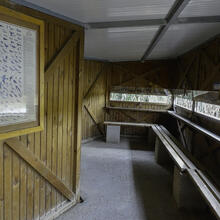
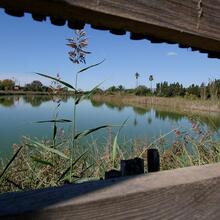
The itinerary passes over the corredora de les Filipines and then crosses the riera de Sant Climent. Shortly afterwards, the entrance to the Natural Reserve is reached, also marked by a roundabout. From here, the path runs alongside the perimeter fence and follows the paved road next to the braç de la Vidala until reaching the environmental information centre. Along this stretch, several bird hides and viewpoints allow for birdwatching. 

It is recommended to begin the visit by entering the environmental information centre and then following the path that visits the bird hides of the maresma de les Filipines, passing through former facilities of the El Toro Bravo campsite. 

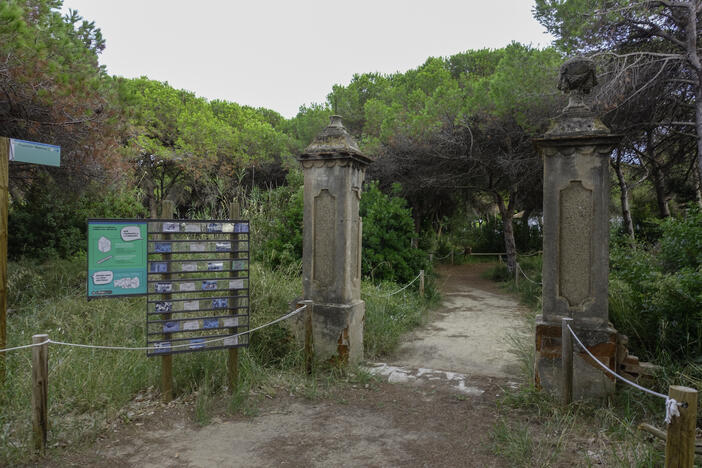
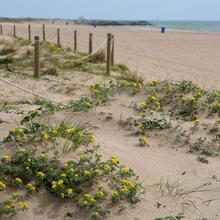
After returning from the hides, without re-entering the information centre, the route continues through the interior of the Pineda de Ca la Pilar and exits onto the beach through a revolving gate. Here, a lookout tower offers views over the beaches of Cal Francès and the Remolar, the mouth of the riera de Sant Climent, and the surrounding coastal landscape.

The return follows the same path, alongside the riera de Sant Climent, back to the information centre car park. From there, the entire route is retraced back to Viladecans.

Tips

ROUTE 

  • Completely flat route with no technical difficulty.

  • Long distance when done on foot. 

  • The itinerary runs mostly alongside the Euro Velo 8 cycle lane until the roundabout beyond the C-31.

  • Occasionally, cars or school buses may circulate on the road leading to the Espai Natural information centre. 

WATER 

  • Bring water from home, as there are no drinking fountains along the route. 

PRECAUTIONS 

  • This is a long route to walk, so prior walking experience is recommended. If necessary, allow for adequate rest between the outward and return journeys.

  • The Camí del Mar is shared with other users; proceed carefully and respectfully. 

  • Do not walk on vegetated dunes along the beach.

  • Respect private property, as the land consists of agricultural plots.

  • Give priority to agricultural vehicles.

  • Avoid using headphones in order to remain alert to machinery.

  • Always use marked paths. 

  • Take special care with children near drainage channels or ditches.

  • Do not litter; take waste home or dispose of it in designated containers. 

  • The Remolar-Filipines Natural Area is a highly sensitive environment. It is essential to preserve the landscape and its ecological value, respect flora and fauna, avoid shouting or making loud noises inside the bird hides, and refrain from placing hands outside observation windows.

  • From 1 April to 30 September, dogs are prohibited at all times on the beaches of la Murtra and la Pineda. On the beaches of the Remolar and Cal Francès, dogs are prohibited year-round. 

WEATHER 

  • Avoid the central hours of the day during summer due to high solar exposure. 

  • Windy days can be particularly uncomfortable along the route. 

RECOMMENDED EQUIPMENT 

  • Trekking poles are helpful for long-distance walking. 

  • Sun protection in summer.

  • Mosquito repellent.

  • If cycling, wear a helmet, reflective elements, and carry puncture repair equipment.

  • Binoculars and a bird guide are highly recommended for enjoying birdwatching in the hides of the Maresma de les Filipines. 

OTHER FACILITIES 

  • Interpretive panels of the Parc Agrari.
  • Rest areas along the Camí del Mar.
  • Interpretive panels (flora, fauna, etc.) within the Natural Area.
  • Environmental information centre of the Espai Natural, offering discovery routes through the Pineda, the beach and wetland areas, as well as guided activities for general and family audiences.
  • Check opening hours of the information centre.
  • Route guide leaflets available at the centre.
  • Picnic tables outside the centre.
  • Lookout towers and bird hides at various points along the route. 

Save the route

What is there

What to see in: R2. Towards the Remolar-Filipines Natural area

Es mostren 1 - 24 de 24

Parc de la Marina

Point of interest
Places
09/09/2025

This area lies within les Parellades, the fertile lands closest to the town, acting as a transition zone towards the waterlogged lands of the present-day Parc Agrari. These were the first lands to be...

Paratge de Ca l'Alemany

27/10/2025

The area where the Viladecans The Style Outlets shopping centre now stands is known as the Paratge de Ca n’Alemany, named after the farmhouse that once stood here. It was a country house that was...
Parc Agrari

Point of interest
Environment
08/09/2025

We are in a delta environment, which has not always looked as it does today. In the Middle Ages, this area was a lagoon landscape with pastureland, dominated by livestock farming, and known as les...

Archaeological site of Les Sorres

27/10/2025

A large archaeological site spanning the municipalities of Viladecans, Gavà and Castelldefels. A few hundred metres from the Camí Ral or carretera de València, the sea reached this area during Iberian...

Cal Simon

Point of interest
Places
08/09/2025

About one hundred metres further on, to the left, stands Cal Simon. Beside it runs the Marina rainwater drainage channel. The corredores are field drainage channels that collect rainwater and carry it...

Can Feliu- Albers

Point of interest
Flora
08/09/2025

Buildings located on your right-hand side, in the area known as els Reguerons. The Granja Escola Hípica Can Feliu was founded in 1998 with the aim of allowing everyone to enjoy the world of horses in...

Agro-environmental area

08/09/2025

An agricultural holding of one hectare where environmental education activities related to agriculture and the natural environment are carried out by the Fundació Sigea.

Activities are offered for both...

Agropolis

Point of interest
Places
08/09/2025

The Universitat Politècnica de Catalunya has a physical facility in Viladecans that includes, among other elements, a mechanisation warehouse and several greenhouses. This space is intended to host...

Reed beds

Point of interest
Flora
08/09/2025

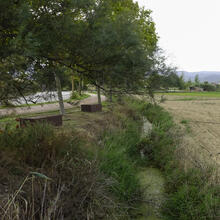
Along the Camí de les Filipines runs a channel or corredora that forms part of the drainage network carrying water from the fields to rieres or lagoons.

This humid environment favours a strip of...

Junipers

Point of interest
Flora
08/09/2025

Observe these shrubs growing alongside the path, planted separately from one another. 

These are càdecs. In the past, before human pressure on the first coastal line, a transitional plant community...

Invasive Plant Species

Point of interest
Flora
08/09/2025

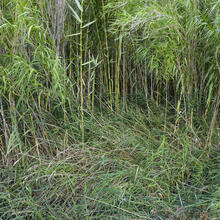
Alongside the previously mentioned canya americana, another invasive species from South America can be observed here: herba de la pampa or plomalls (Cortaderia selloana). 

Introduced as an ornamental...

Filipines Drainage Channel

08/09/2025

One of the main drainage channels, collecting runoff from agricultural fields from near the railway station and discharging it into the lower section of the riera de Sant Climent, which flows into the...

Sant Climent Stream

Point of interest
Environment
08/09/2025

This important drainage channel crosses both the Parc Agrari and the municipality, originating in the eastern foothills of the Ordal-Garraf range. Known as the riera de Sant Climent or riera de...

Reguera Salabrosa Viewpoint

08/09/2025

From this viewpoint, the head of the braç de la Vidala can be seen, draining the maresma de la Vidala into the estany del Remolar and onward to the sea. 

The surrounding landscape typifies this...

Tamarisk Trees

Point of interest
Flora
08/09/2025

Groups of trees distinct from pines, elms or poplars appear here, sometimes as large shrubs. They grow in deltaic environments with brackish waters, deep well-drained soils, near the dunes. 

This is...

La Vidala Viewpoint

Point of interest
Landscapes
08/09/2025

The Vidala arm, is an arm of the estany del Remolar appearing on 19th-century maps and enlarged in the 1950s–1960s.

Today it is fully naturalised, though its conservation status is affected by nutrient...

Straight ahead

08/09/2025

Continue towards the environmental information centre. After completing the loop through the interior hides and crossing Ca la Pilar woodland, the route reaches the beach lookout tower and returns...

Environmental Information Centre

Point of interest
Places
08/09/2025

The visitor and information centre provides access to the Remolar-Filipines Natural Area. It is a renovation and extension of the former El Toro Bravo campsite reception. 

As an environmental education...

Pollancres Pond Bird Hide

Point of interest
Places
08/09/2025

The estany del Remolar and the maresma de les Filipines form one of the main wetland areas of the Llobregat delta. The estany del Remolar, documented since the 11th century, is an ancient river mouth...

Orchids

08/09/2025

In the adjacent meadows, during spring and summer, various orchid species may be observed in bloom. Further along, in the Pineda de Ca la Pilar, interpretive panels provide additional information. 

Maresma wetland Bird Hide

Point of interest
Places
08/09/2025

The estany del Remolar and the maresmes de les Filipines form one of the most important wetland systems in the Llobregat delta. The estany del Remolar lies beyond, near the airport, connecting to the...

Ca La Pilar

Point of interest
Places
08/09/2025

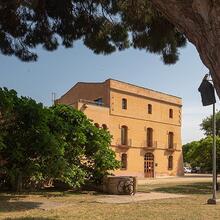
Restored buildings such as Ca la Pilar and Can Casanoves form part of the city’s architectural heritage. 

Around 1917, Pilar Moragas commissioned Puig i Cadafalch, a leading figure of Catalan...

Beaches and Stream Viewpoint

Point of interest
Places
08/09/2025

From the lookout tower, the beaches of Cal Francès can be seen, bordered to the south by the platja de la Pineda and the Estany de la Murtra wetland. To the north lies the platja del Remolar, within...

Coastal Pinewood (La Pineda)

Point of interest
Flora
08/09/2025

From the 16th century onwards, the transition from natural to agricultural land required controlling sand movement inland. Stone pines were planted on beach sand, which is still present underfoot...

Images
Rating
No votes yet
Ratings with comments Publish rating
Visits

What to see in: R2. Towards the Remolar-Filipines Natural area

Es mostren 1 - 10 de 10
  • Filter by type
    Theme
Services

What to do in: R2. Towards the Remolar-Filipines Natural area

Es mostren 1 - 10 de 10
  • Filter by type
    Theme